
The US carmaker's entry into India is expected by the last quarter of the current financial year.

Retirement fund body EPFO added 16.05 lakh net new members in December, which is 9.69 per cent higher compared to November 2024, as per the payroll data released on Tuesday. Further, a labour ministry statement said there was a growth of 2.74 per cent in net payroll additions compared to December 2023.

Macroeconomic data announcements, the last batch of Q1 earnings and global trends are the major factors that would influence trading sentiments in the equity market in a holiday-shortened week ahead, analysts said. Besides, trading activity of foreign investors would also be a crucial factor in dictating movement in the market. Equity markets would remain closed on Thursday for Independence Day.

LIC said USTR's views are based on an incomplete understanding of Indian insurance regulation and LIC's functioning.

Benchmark equity indices Sensex and Nifty pared early gains to settle lower on Wednesday due to late selling in index major Reliance Industries, ITC and HDFC Bank even as the RBI took the first step towards a rate cut in its monetary policy review. Erasing its early gains, the 30-share BSE Sensex fell 167.71 points or 0.21 per cent to close at 81,467.1. During the day, it surged 684.4 points or 0.83 per cent to hit an intra-day high of 82,319.21.

From the 30-share pack, Adani Port, Bharti Airtel, Asian Paints, IndusInd Bank, Bajaj Finserv, Reliance Industries, Infosys, UltraTech Cement, HDFC Bank, HCL Technologies and ICICI Bank were among the laggards. Tata Motors, Axis Bank, Maruti, Larsen & Toubro, ITC and Tata Steel were among the gainers.

'Currently, it takes between two and three years to formulate the request for proposal for procuring specific military equipment for the armed forces. It should not be this way.'

A shortlist using artificial intelligence would be prepared to identify eligible candidates and match them to the suitable internship opportunity. The shortlist would be shared with the companies on Tuesday, October 15.

From the 30 Sensex firms, Larsen & Toubro, Reliance Industries, Axis Bank, Asian Paints, Tata Motors, Bajaj Finance, Maruti, Bajaj Finserv, Kotak Mahindra Bank, Titan, Adani Ports and HDFC Bank were the major laggards. JSW Steel emerged as the only gainer.

Despite multiple headwinds at the start of 2023, the Indian markets delivered a strong performance, posting 19-20 per cent growth for the year. Even as new records were set, investor sentiment remains strong going into 2024, given the lower inflation, expectations of steady to lower interest rates, higher economic growth, and strong inflows. However, the overriding concern for most brokerages is valuations.

Among the Sensex firms, Kotak Bank, PowerGrid, ICICI Bank, HDFC Bank, PowerGrid were the major gainers. HUL, TCS, M&M, IndusInd Bank, HCL Tech were among the losers.

The Reserve Bank of India's (RBI's) interest rate decision, West Asia conflict and trading activity of foreign investors are the key factors that will dictate investors' sentiment in the market this week, analysts said. Moreover, quarterly earnings from IT bellwether TCS, domestic macroeconomic data and movement in global oil benchmark Brent crude would also guide trends in the market. Worsening tensions in the Middle East and foreign fund outflows were the major culprits behind the equity markets sharp fall last week.

"Humble", "kind", and "spiritual" are some adjectives used to describe K Krithivasan, chief executive officer designate and global head of banking, financial services, and insurance business, Tata Consultancy Services (TCS), where he is an old stager. Krithivasan, based out of Chennai, has been part of the global technology sector for over 34 years. He joined TCS in 1989. During his long tenure at the company, he has held leadership roles in delivery, customer relationship management, large programme management, and sales.
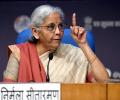
The Budget 2025-26 meets the expectations of fiscal consolidation, maintaining capital expenditure, and boosting consumption through tax cuts.
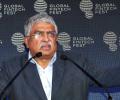
'Binary fission will happen -- startups will lead to more startups.'

Among the Sensex firms, Hindustan Unilever, Reliance Industries, Infosys, Asian Paints, ITC and UltraTech Cement were the major gainers. State Bank of India, JSW Steel, Axis Bank, ICICI Bank, Tata Steel and Tata Motors were among the laggards.

From the Sensex basket, Asian Paints, Sun Pharma, HDFC Bank, Tata Consultancy Services, Axis Bank, Tata Steel, JSW Steel, Larsen & Toubro, ICICI Bank and Power Grid were the major gainers. Tata Motors dropped over 8 per cent despite reporting over three-fold jump in consolidated net profit at Rs 17,528.59 crore for the fourth quarter ended March 31, 2024. NTPC, Bharti Airtel, Titan, State Bank of India and Nestle were the other major laggards.

In today's rapidly evolving digital payment landscape, security concerns remain a top priority for stakeholders across sectors.

Private equity (PE) activity in India between January and November 2024 recorded a total value of $30.89 billion across 1,022 deals, a 22.7 per cent increase in value and an 18.4 per cent rise in deal count compared to $25.17 billion across 863 deals during the same period in 2023. Notable large deals during the period include Walton Street India Investment Advisors at $1.5 billion, and KiranaKart Technologies at $1.35 billion.

Among the 30 Sensex companies, Larsen & Toubro, Power Grid, NTPC, State Bank of India, Reliance Industries and HDFC Bank were the biggest laggards. Sun Pharma and Nestle were the only gainers.

The small finance bank model may still be testing the water some 10 years since its launch. According to banking experts, the regulator has taken a cautious approach in granting approvals. Unity Small Finance Bank was the last one to get a licence in the category in November 2021.

The Budget for 2024-25 should focus on employment generation, besides promoting the manufacturing sector, economists attending the pre-Budget consultation meeting with Finance Minister Nirmala Sitharaman here on Wednesday said. The meeting was attended by National Co-convenor Swadeshi Jagran Manch Ashwani Mahajan, Director and Chief Executive of the Institute for Studies in Industrial Development (ISID) Nagesh Kumar, and TCA Anant among others.

Among the 30-share Sensex pack, State Bank of India, Reliance Industries, Hindustan Unilever, NTPC, Larsen & Toubro, Nestle India, Power Grid, ITC, JSW Steel and Sun Pharmaceuticals were the major gainers. On the other hand, HDFC Bank, Titan, Mahindra & Mahindra, IndusInd Bank, UltraTech Cement, Tata Motors, HCL Technologies and Asian Paints were among the laggards.

The improvement in the performance of actively managed mutual fund (MF) schemes is acting as a key tailwind for the nearly Rs 50 trillion industry, Kotak Institutional Equities (KIE) said in a report. The report adds that the two largest listed asset management companies (AMCs) - HDFC and Nippon India - are likely to be the biggest beneficiaries. "The industry has a solid track record of delivering alpha on 10-year returns (70-80 per cent of assets under management (AUM) beat the benchmark), with shorter duration performance also on an upswing.
Tata Consultancy Services (TCS), the country's largest player in information-technology (IT) export, has seen a sharp decline in its contribution to the Tata group's market capitalisation in recent years though it remains the most valuable company in the conglomerate. Its 44.8 per cent share in the combined market capitalisation of the listed Tata group companies is the lowest since March 2009 and is down sharply from the all-time high contribution of 74.4 per cent at the end of March 2020.

'That refresh programme -- because they are big aircraft and we cannot ground them all at the same time -- will last well into 2027.'

Tata Steel, Tech Mahindra, NTPC, JSW Steel, Power Grid, UltraTech Cement, HCL Technologies and HDFC Bank were among the major gainers. Bharti Airtel, Hindustan Unilever, Axis Bank, Reliance Industries, Kotak Mahindra Bank, ICICI Bank and IndusInd Bank were among the laggards.
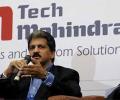
Now sole contender as L&T Infotech quits race
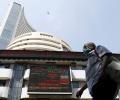
ITC was the top loser in the Sensex pack, shedding nearly 3 per cent, followed by Tech Mahindra, Axis Bank, Asian Paints, TCS, HCL Tech, HDFC and Kotak Bank.
From the Sensex pack, Tata Motors, NTPC, Bajaj Finserv, Power Grid Corp, Titan, Asian Paints, IndusInd Bank, Maruti Suzuki India and Tata Steel were among the biggest gainers. Sun Pharmaceuticals, ITC, Hindustan Unilever, Bharti Airtel, UltraTech Cement and Reliance Industries were among the laggards.

'Unless a comedian is involved in something society deems unforgivable...'

The number of active SIP accounts is nearing the 100 million milestone.
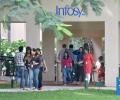
Infosys was the only large-cap IT player to report sequential constant currency (cc) revenue growth for the June quarter (1 per cent ), which was ahead of analyst expectations, but the company's sharp downward revision in its growth guidance took most brokerages by surprise. In line with the cut in its FY24 revenue guidance (cc) to 1-3.5 per cent, brokerages have unanimously reduced FY24 EPS estimates for the company in the range of 2-4 per cent, though the Street is likely fearing even further downside, they say. Global brokerages Macquarie and Nomura downgraded Infosys to underperform and reduce ratings, respectively, with the latter cutting the target price to Rs 1210 from Rs 1260.

The message is clear: The 60-year-old wise uncles need to handhold the 40-year-old entrepreneurs when, obsessed with ambition and greed for growth, they become a victim of hubris, points out Tamal Bandyopadhyay.

Bajaj Auto was the top gainer in the Sensex pack, surging around 7 per cent, followed by Bajaj Finance, Bajaj Finserv, Kotak Bank, PowerGrid and Axis Bank. On the other hand, ONGC, HDFC, TCS and Reliance Industries were among the laggards.

Investors' wealth plummeted by Rs 5.49 lakh crore on Friday as markets faced a massive correction tracking a weak trend in global peers and fresh foreign fund outflows. Falling for the third day running, the 30-share BSE Sensex tumbled 1,017.23 points or 1.24 per cent to settle at 81,183.93. During the day, it plunged 1,219.23 points or 1.48 per cent to 80,981.93.

Among the 30 Sensex companies, Axis Bank, ICICI Bank, HDFC Bank, Tech Mahindra, Larsen & Toubro, Bajaj Finserv, State Bank of India, Reliance Industries and Infosys were the biggest gainers. Power Grid, Asian Paints, Tata Steel, Nestle, Maruti and JSW Steel were among the laggards.

Benchmark Sensex closed above the 85,000 level for the first time while Nifty scaled the 26,000 peak at close on Wednesday as fag-end buying in banking and power shares helped stock markets recoup early losses. After a see-saw trade during the day, the 30-share BSE Sensex rose by 255.83 points or 0.30 per cent to settle at an all-time high of 85,169.87. During the day, it surged 333.38 points or 0.39 per cent to hit a record intra-day peak of 85,247.42.

Dream11, Baazi Games, Zupee and WinZO among others are invited for the discussion with the anti-money laundering watchdog.

Bajaj Finserv, Infosys, Mahindra & Mahindra, Tech Mahindra, Hindustan Unilever, State Bank of India and HCL Technologies were the biggest gainers. On the contrary, Asian Paints, JSW Steel, NTPC and Adani Ports were among the laggards.
